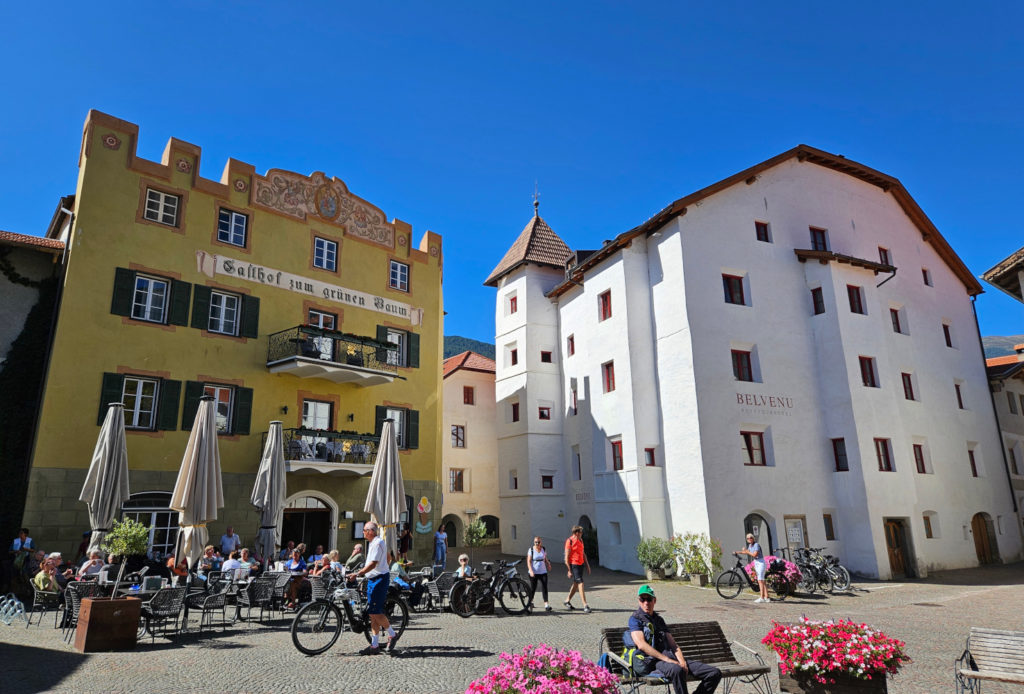
The Town of Glurns
The town of Glurns is mentioned for the first time in a document dated April 30, 1304, where it appears under the German term “stat.” Long before Glurns became a town, there was already a village of the same name, which had developed at a ford across the River Adige and lay within the sphere of influence of the Bishop of Chur. Over time, this economic and political influence was systematically curtailed by the Counts of Tyrol.
The town of Glurns was founded by Meinhard II of Tyrol, who endowed it with market rights and special privileges. In the late Middle Ages, Glurns experienced a period of economic prosperity, due in particular to the salt trade and its strategic position along the important commercial route linking Lombardy with southern Germany.
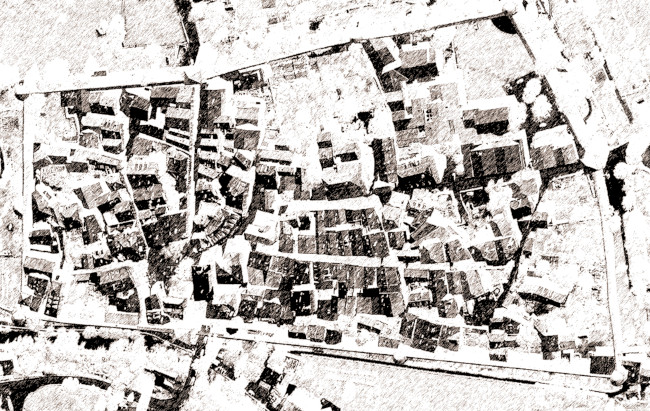
Glorenza
The Battle of Calven
After the Battle of Calven in 1499, fought between the Tyrolean-Habsburg forces and the troops of the Three Leagues, Glurns was reduced to rubble and ashes. By order of Emperor Maximilian I, the town was rebuilt according to the plans of Jörg Kölderer. It is to him that Glurns owes its present appearance, with its town walls and gates. During this period of reconstruction, the Green Tree Inn (Grüner Baum) also took on its current form.
In the years that followed, Glurns gradually lost its importance as a center of trade, while its strategic significance as a military stronghold against the hostile forces of the Three Leagues continued to grow. This military importance persisted until the second half of the 17th century, when tensions in the region began to ease noticeably.
You are currently viewing a placeholder content from Default. To access the actual content, click the button below. Please note that doing so will share data with third-party providers.
Knight Reinprecht von Hendl and the “High House”
On the site of an older residence belonging to the Carthusian monastery of Allerengelberg in Schnals, Knight Reinprecht von Hendl had the existing three-storey residential building rebuilt in 1562 as his town palace, or “castle.”
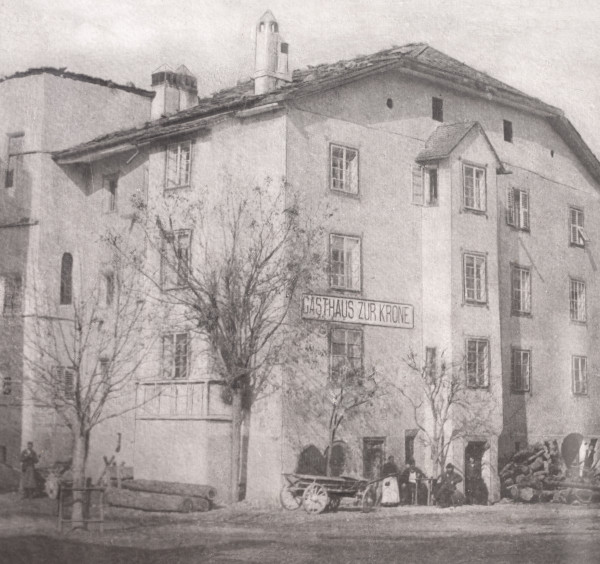
Gasthof Krone (heute Belvenu) in Glurns
Antoni Waschgler’s Inn on the Town Square
The inn known as “Zum Grünen Baum” was first mentioned in 1732 in the fire damage register of the town of Glurns, where it appears under the name “Antoni Waschgler’s inn on the town square.” In that year, the entire town fell victim to a devastating fire, and the inn was among the buildings severely affected.
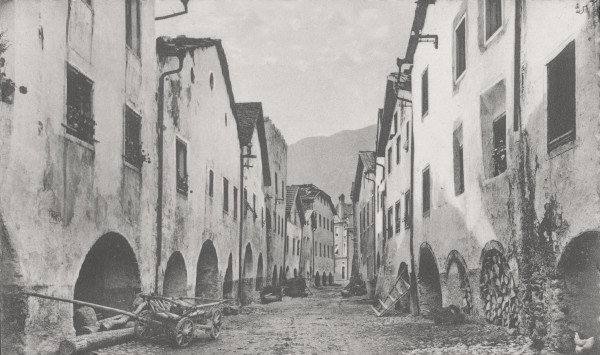
Die Laubengasse in Glurns.
Bischof Josef Grasser
The town’s most renowned son was born in Glurns on December 3, 1782. His parents were Josef Grasser and Barbara Veith. His father, the owner of the Gasthof zum Grünen Baum, was a furrier by trade and, as such, a prosperous man who maintained commercial ties extending as far as France. In the fateful year of 1799, during the French invasion of the Vinschgau Valley, he served as mayor and guided the fortunes of his hometown after it had been reduced to ashes. His wife died at an early age in 1788. Their marriage produced two children, Josef and Anna.
Josef, a bright and gifted boy, attended the Benedictine secondary school in Merano from 1795 to 1800. He subsequently studied philosophy and theology at the University of Innsbruck and was ordained a priest in Merano in 1806. On December 28 of that same year, he celebrated his first Mass in Glurns.
This marked the beginning of his remarkably diverse career. He initially served as a professor of Latin and rector in Brixen, followed by appointments as catechist and rector at the grammar school in Innsbruck. After the reunification of Tyrol with Austria in 1814, he was entrusted with the position of General Director of secondary schools in Tyrol. From 1821 onward, he held the chair of moral theology at the Imperial and Royal University of Innsbruck. Yet as early as 1822, an imperial decree appointed him Bishop of Treviso, and on March 19 he formally assumed his episcopal office. He soon earned the respect and trust of his diocesan community.
In recognition of his ability and dedication, both the Emperor and the Pope transferred him in 1829 to the far more important Diocese of Verona. For ten years he served as Bishop of Verona, administering his office with such success that he was honored by both papal and imperial authorities.
Bishop Grasser died on November 22, 1839, not yet 57 years of age, and was deeply mourned by the citizens of Verona. He was laid to rest in the Chapel of the Blessed Sacrament in Verona Cathedral.
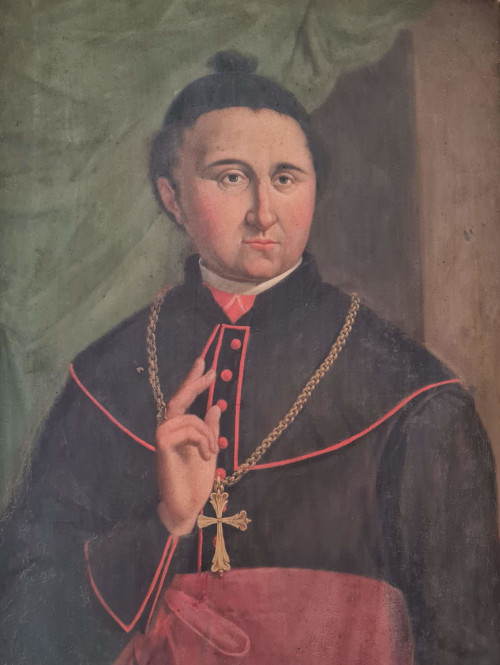
Bischof Grasser
Mayor Anton Martin Trauner
Anton Martin Trauner was born on December 19, 1810, and died on April 17, 1880. He was the son of Anton Trauner and Anna Maria Grasser. His mother was the daughter of Johann Grasser, the owner of the Gasthof zum Grünen Baum. In 1852, Anton Martin Trauner—who also served as mayor of Glurns—took over the management of the inn.
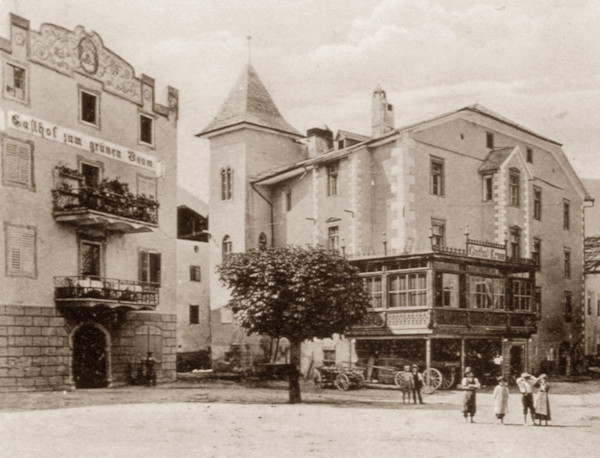
Der Grüne Baum und das "Hohe Haus" bzw. Stadtpalais.
Mayor Anton Trauner
The marriage of Anton Martin Trauner and Anna Maria Conrad of Münster produced three children, the eldest of whom was Anton. He served as mayor of Glurns in 1887 and again in 1898. As an innkeeper, he undertook a major renovation of the Gasthof zum Grünen Baum in 1902, giving it the dignified and representative appearance it still retains today.
This period coincided with the general rise of tourism in Tyrol. At that time, the Gasthof zum Grünen Baum primarily served as a stopping point and overnight accommodation for travelers bound for Sulden, who reached the region via the Reschen Pass.
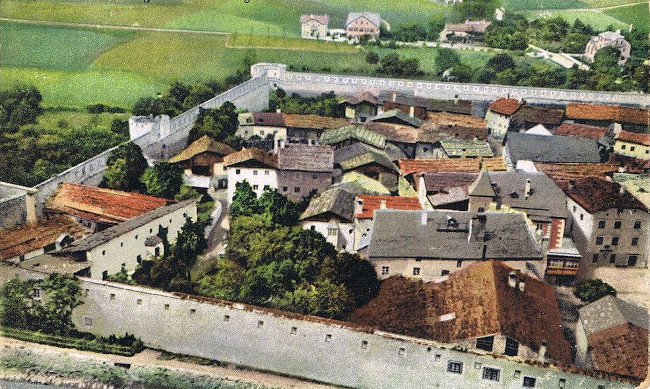
Glurns vor dem Ersten Weltkrieg
The Option
In 1939, during the infamous period known as the Option, the Trauner family was stripped of its license to operate the inn. It was not until 1945, after the end of the Second World War, that the license was restored. However, Mrs. Trauner was required to establish a Dopolavoro, a type of workers’ leisure club. In the evenings, after the day’s work was done, the establishment was frequented mainly by Italian laborers and members of the Financial Police.
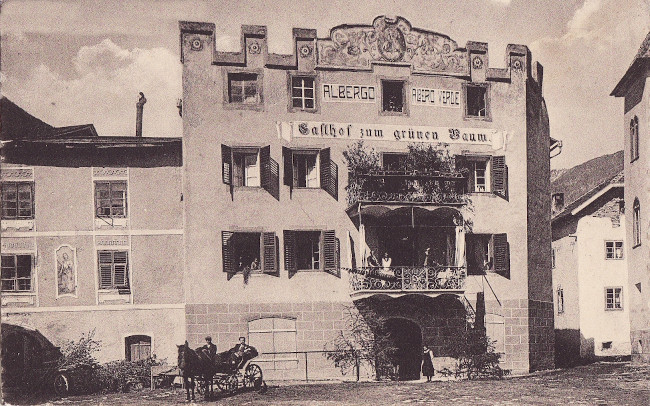
Gasthof Grüner Baum ital. "Albergo Albero Verde"
The Post-War Period
In 1945, Mrs. Amalia took over the inn and managed it together with her sister Johanna and her brother Anton until 1972. She was the grandmother of Manfred Bachmayer, who would later become the inn’s owner.
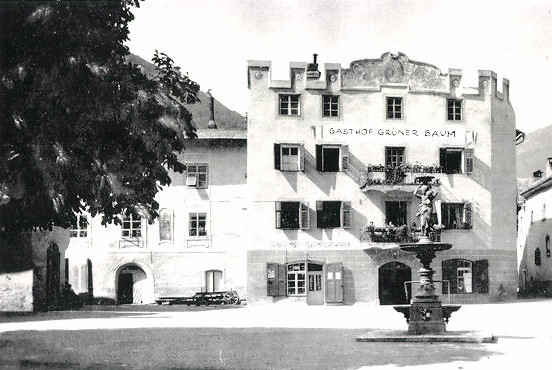
Stadtplatz von Glurns
From Trauner to Bachmayer
Mrs. Gertrud Trauner, widowed Bachmayer and granddaughter of Anton Trauner, took the reins and assumed responsibility for the inn’s management.
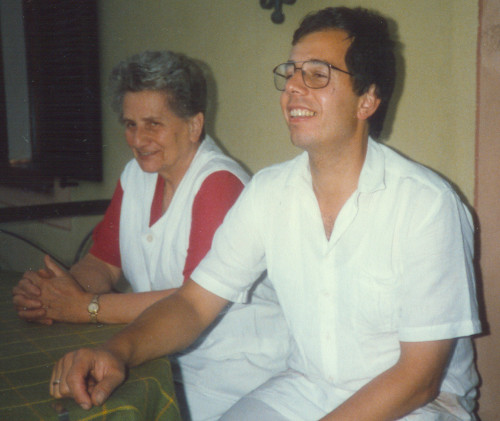
Gertrud & Manfred Bachmayer
Manfred and Norberta
Manfred Bachmayer, together with his wife Norberta Paulmichl, took over the Grüner Baum from his mother, Gertrud.
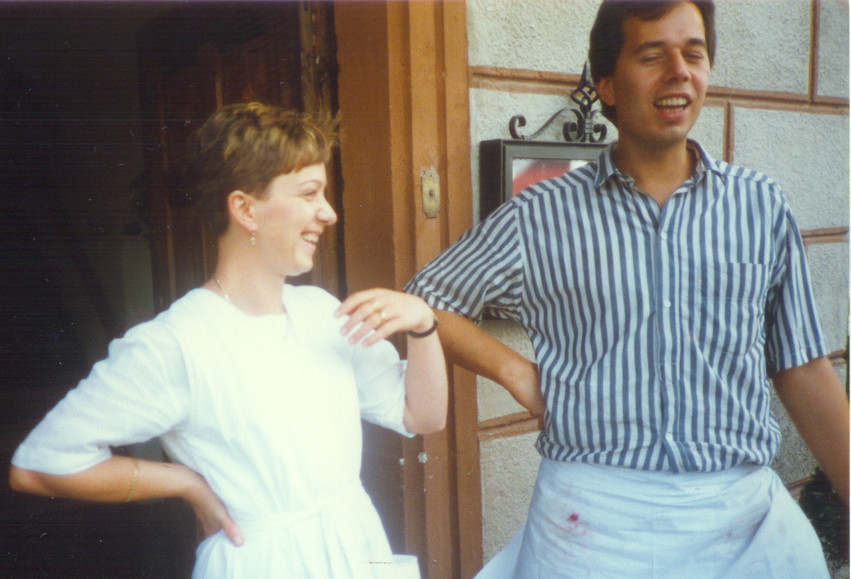
Norberta Paulmichl & Manfred Bachmayer
The “High House” on the Town Square – Neighbors United
The former monastery on Glurns’ town square, known as the “High House” or Gasthof Krone, was taken over by the Bachmayer family.
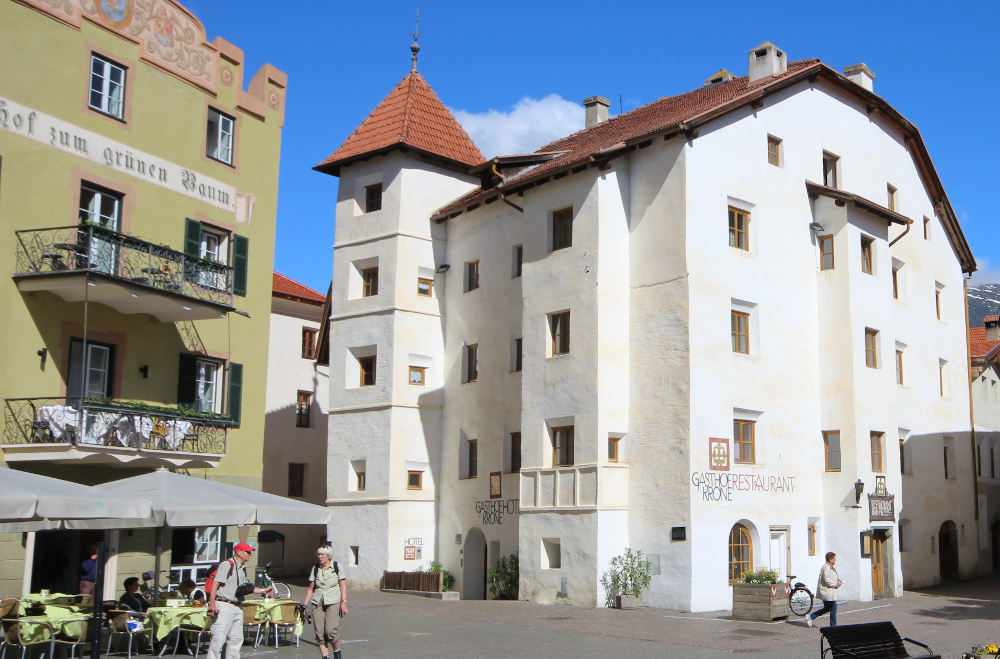
Das ehemalige Hotel Krone in Glurns
A Change of Generations
Manfred Bachmayer and Norberta Paulmichl passed the inn on to their son Alexander. Alexander’s son, Maximilian, was born in 2019, followed by his daughter, Lilianna, in 2021.
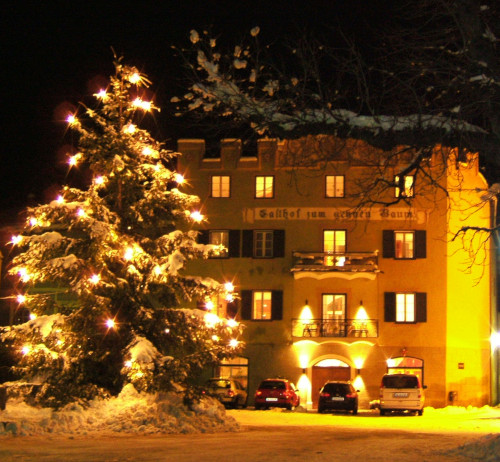
Zur Weihnachtszeit.
From the High House to the Belvenu Boutique Hotel
The award-winning transformation of the historic neighboring building, the “High House,” gave rise to the Belvenu Boutique Hotel. The project was carried out in collaboration with architect Günther Fritz.
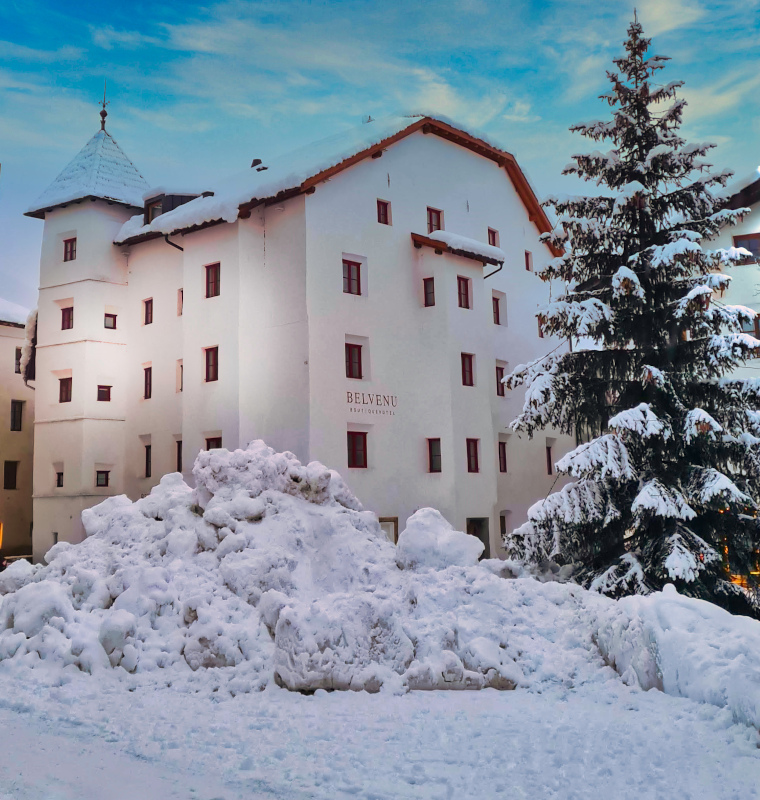
Belvenu Boutiquehotel im Rekordwinter 2020/2021
Today
Since its first documented mention in 1732, the Grüner Baum has been in the care of our family. With great joy and deep gratitude, we continue the long-standing tradition of this house. Our guests have always been at the heart of everything we do. Providing them with a place where they can feel at ease—a place to arrive, linger, and return to with pleasure—has always been, and remains, our greatest priority.
Generations of heartfelt hospitality have shaped both the Grüner Baum and the Belvenu Boutique Hotel, making them what they are today: two houses where everyone is warmly welcomed.